
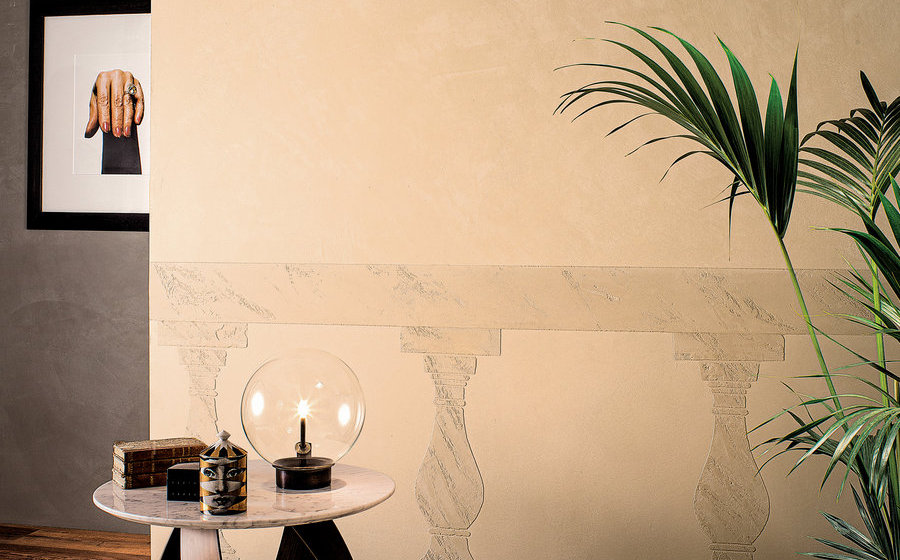
How Long Does Venetian Plaster Last? A Guide to Plaster Durability
Ready to Transform Your Walls?
Get samples, pricing, or connect with a certified applicator.
Introduction
Roman plaster in Pompeii survived nearly 2,000 years before Vesuvius buried the city. The plaster from Venetian palazzos, applied five centuries ago, is still performing. This isn’t archaeological curiosity; it’s evidence of fundamental durability.
When you specify venetian plaster, you’re choosing a finish that will outlast occupants and ownership changes. It’s the longest-lasting interior wall finish available, with lifespan measured in decades rather than years.
This guide addresses the durability question comprehensively: what the historical evidence shows, what modern testing confirms, what factors affect lifespan, and how to maintain plaster finishes to achieve maximum longevity.
Historical Evidence: Plaster Surviving Centuries
Roman Plaster (79 AD and Beyond)
Pompeii preserved a remarkable laboratory of Roman plaster technology. The city was buried in 79 AD, freezing building conditions in place. Modern analysis of Pompeii plaster reveals:
- Marmorino finishes (polished marble dust plaster) applied to elite residences remain intact and retain surface polish
- Pigmented plasters show color retention remarkable for nearly 2,000 years
- Decorative frescoes (painted plaster) maintain vibrant colors where protected from direct weathering
- Adhesion strength remains sufficient that removal requires significant effort
Roman plaster used the same basic chemistry as modern lime plaster: calcium hydroxide from slaked limestone, marble dust aggregates, and mineral pigments. The formula was optimized over centuries and remains essentially unchanged.
The implication: lime plaster, correctly specified, is a 2,000-year-proven material.
Venetian Plaster (15th–18th Centuries)
Venice’s dominance as a maritime republic (800–1700s) coincided with development and refinement of marmorino techniques. Venetian palazzos showcase remarkable plaster preservation:
- Interior marmorino applied in the 16th–17th centuries remains intact in dozens of palazzos
- Polished finishes retain surface luster despite centuries of occupation and cleaning
- Color stability of earth pigments remains exceptional; pigments haven’t shifted or faded
- Adhesion to substrate shows no delamination despite 400+ years of humidity cycling
Venetian plaster wasn’t a luxury reserved for one palace; hundreds of structures showcase durability. The pattern is consistent: with proper maintenance, venetian plaster lasts indefinitely—essentially a permanent finish.
Historic German and Austrian Plaster
Germanic and Alpine building traditions (surviving structures from 13th–16th centuries) showcase plaster durability in cold, wet climates:
- Tadelakt lime plaster in bathhouses and wet spaces remains impermeable despite constant moisture exposure
- Color-blended earth pigment finishes show minimal degradation despite weather and humidity cycling
- Patina development (the “lived-in” quality of aged plaster) is more a feature of aesthetic aging than material failure
The pattern holds across climates and centuries: lime plaster’s durability is exceptional.
Modern Plaster Lifespan Expectations
While we cannot definitively guarantee a finish will last 500 years (contemporary tracking only extends decades), modern test data and practical experience suggest:
Expected lifespan with proper care:
- Interior residential: 20–50+ years with minimal maintenance
- Interior commercial/hospitality: 15–30 years with regular maintenance
- Wet areas (with proper waterproofing): 15–25 years depending on water exposure
These are conservative estimates for typical installations. Many installations are performing after 30–50+ years with minimal visible degradation.
What “Durability” Means
Durability encompasses:
- Physical integrity: Does the plaster remain bonded to substrate without delamination?
- Surface wear resistance: Does the finish show damage from impact, abrasion, or scratching?
- Color stability: Do pigments fade or shift?
- Environmental resistance: Does moisture, temperature cycling, or light affect performance?
- Aesthetic appeal: Does the finish age gracefully or show rapid cosmetic degradation?
Lime plaster performs exceptionally across all categories.
Comparison to Other Finishes: The Longevity Perspective
Paint (Acrylic Latex)
- Lifespan: 5–7 years in typical interiors
- Degradation pattern: Yellowing, fading, sheen loss (years 2–4); paint failure, peeling (years 5–7)
- Replacement cost: $2–4/sq ft (materials and labor)
- Maintenance: Spot touch-ups every 2–3 years, complete repaint every 5–7 years
50-year cost comparison (5,000 sq ft residential):
- Paint: 7–10 cycles × $10,000–15,000/cycle = $70,000–150,000
Wallpaper
- Lifespan: 7–10 years
- Degradation pattern: Seam separation, pattern fading, water damage vulnerability
- Replacement cost: $3–6/sq ft
- Maintenance: Periodic spot repairs, replacement of damaged sections
50-year cost comparison (5,000 sq ft):
- Wallpaper: 5–7 cycles × $15,000–30,000/cycle = $75,000–210,000
Ceramic Tile
- Lifespan: 25+ years (longer if grout maintained)
- Degradation pattern: Grout failure and staining; tile remains intact but grout requires resealing every 3–5 years
- Replacement cost: Initial $5–12/sq ft; grout resealing $2–4/sq ft
- Maintenance: Annual sealing and grout cleaning, grout replacement every 10–15 years
50-year cost comparison (bathroom 200 sq ft):
- Initial: $1,000–2,400
- Grout maintenance (sealing 10 times): $400–800
- Grout replacement (2–3 times): $800–2,400
- Total: $2,200–5,600
Venetian Plaster
- Lifespan: 20–50+ years with minimal maintenance; potentially indefinite with proper care
- Degradation pattern: Cosmetic aging (patina develops); underlying material remains sound
- Replacement cost: Initial $8–15/sq ft; touch-ups/repairs $2–4/sq ft if needed
- Maintenance: Occasional cleaning; waxing every 3–5 years if desired; no structural maintenance required
50-year cost comparison (5,000 sq ft residential):
- Initial: $40,000–75,000
- Maintenance (cleaning, waxing): $5,000–10,000
- Touch-ups: $2,000–5,000 (if needed)
- Total: $47,000–90,000
The Economic Reality
Over a 50-year timeline:
- Paint is cheapest initially but costliest over time ($70,000–150,000)
- Plaster costs more upfront but often costs less over the full lifecycle ($47,000–90,000)
- For residential applications exceeding 5,000 sq ft, plaster becomes cost-competitive by year 15–20
For commercial applications with high square footage and multiple paint cycles, plaster is typically cost-favorable even when accounting for installation labor and higher initial material costs.
Factors Affecting Plaster Durability
While lime plaster is inherently durable, several factors affect whether a finish achieves 20-year or 50-year lifespan.
Substrate Quality
The substrate—what the plaster is applied over—is critical.
Good substrates:
- Properly prepared masonry (brick, stone, concrete)
- Gypsum board primed with lime primer
- Existing lime plaster base coat
Poor substrates:
- Contaminated surfaces (wax, silicone, release agents)
- High-gloss acrylic paint (poor adhesion)
- Damaged drywall
- Inadequately sealed substrate allowing water infiltration
Substrate preparation accounts for 70% of adhesion problems. A perfectly formulated plaster applied to a contaminated substrate will eventually fail.
Application Skill
Lime plaster application is craft-dependent. Skilled applicators achieve:
- Proper coat thickness (critical for strength and adhesion)
- Appropriate timing between coats (affects layer bonding)
- Optimal burnishing (creates durability-enhancing crystal compression)
- Color consistency (aesthetic stability)
Poor application results in:
- Thin coats (weak and prone to damage)
- Improper timing (weak interlayer adhesion)
- Inadequate burnishing (soft, easily scratched surface)
- Color inconsistency (appearance of failure)
This is why specifying certified applicators matters for durability. Skill directly affects lifespan.
Product Quality
Quality variations in lime plaster formulations affect durability:
High-quality formulations (like Giorgio Graesan):
- Carefully sourced natural hydraulic lime (consistent strength characteristics)
- Matched aggregate sizing (optimal packing density)
- Natural mineral pigments (proven color stability, zero synthetic dyes)
- Minimal additives optimizing workability without sacrificing durability (no acrylic binders, no VOCs)
Lower-quality products:
- Variable lime quality (inconsistent curing)
- Inappropriate aggregate sizing (poor surface integrity)
- Synthetic pigments (potential fading)
- Cost-cutting additives (sometimes reducing durability)
Over 50 years, the difference between high-quality and marginal-quality plaster becomes obvious: premium products maintain appearance and integrity; marginal products show degradation, color shift, and possible spalling.
Environmental Conditions
Different building environments affect plaster durability:
Interior residential (ideal conditions):
- Stable temperature (60–75°F)
- Moderate humidity (40–60% RH)
- Low chemical exposure
- Protected from direct water contact
- Expected lifespan: 30–50+ years
Interior commercial/hospitality:
- Moderate temperature fluctuations
- Variable humidity
- Exposure to cleaning chemicals
- Higher traffic and contact
- Expected lifespan: 15–30 years
Wet areas (bathrooms, showers, saunas):
- High humidity (60–100% RH)
- Direct or indirect water contact
- Requires waterproofing and sealing
- Expected lifespan: 15–25 years (with proper waterproofing)
Exterior or semi-exposed:
- Temperature cycling
- UV exposure
- Moisture cycling
- Weather exposure
- Expected lifespan: 10–20 years (exterior applications are specialty systems)
Interior residential spaces with stable conditions maximize durability. High-humidity or exposed conditions reduce lifespan but don’t eliminate it with proper specification.
Maintenance Schedule
Minimal maintenance maximizes durability:
Annual maintenance:
- Gentle cleaning (neutral pH water or mild soap)
- Visual inspection for damage or moisture issues
- Address any water infiltration immediately
Every 3–5 years:
- Waxing (if applied) renewal for polished finishes
- Deep cleaning if needed
- Touch-up of damaged areas
As needed:
- Repair of impact damage
- Addressing water issues promptly
- Localized touch-ups
Plaster that’s well-maintained can easily achieve 50+ year lifespans. Neglected plaster may show premature failure. The good news: maintenance is minimal and inexpensive compared to paint repainting cycles.
The Lime Carbonation Process: Why Plaster Gets Stronger Over Time
Unlike paint (which hardens through solvent evaporation and then slowly degrades), lime plaster undergoes a chemical process that actually strengthens the material over time.
The Chemistry of Carbonation
The core reaction:
Ca(OH)₂ + CO₂ → CaCO₃ + H₂O
As atmospheric carbon dioxide penetrates the plaster, it reacts with calcium hydroxide (the active binder) to form calcium carbonate—the mineral that makes limestone. The plaster is literally turning back into stone.
This process has several implications:
Progressive Strengthening
The carbonation process takes 4–12 weeks for surface layers but continues deeper into the plaster for months or years. As it progresses:
- Weeks 1–4: Surface hardens; subsurface remains curing
- Months 1–3: Progressive carbonation deepens; plaster strength increases
- Months 3–12: Near-complete carbonation; maximum strength achieved
- Years 1+: Deep carbonation continues; plaster becomes progressively harder
This explains why historical plaster is harder and more durable than the day it was applied. The material literally improves with time.
Crystal Structure Development
As carbonation progresses, the calcium carbonate crystals grow and interlock:
- Fresh plaster: Amorphous calcium carbonate, relatively soft
- Partially carbonated: Crystalline structures developing, increasing hardness
- Fully carbonated: Interlocking calcite crystals, stone-like hardness
This crystal development is why ancient plaster is often harder than the original limestone aggregate. The binder has formed perfect crystal structures, optimally bonded.
Implication for Durability
This progressive strengthening is why plaster durability is exceptional. The finish gets stronger, not weaker, with time (assuming environmental conditions are appropriate). Paint does the opposite: it oxidizes, chalks, and fails. Plaster carbonates and strengthens.
Impact and Scratch Resistance
A common question: doesn’t plaster scratch easily?
The answer is contextual:
Soft Plaster (Freshly Burnished)
Immediately after application and burnishing, plaster is softer and more prone to scratching. In this period (first few weeks), care is warranted. Avoid:
- Dragging objects across surfaces
- Leaning furniture against walls
- Aggressive cleaning
Cured Plaster (After 4–12 Weeks)
After carbonation completes, lime plaster achieves hardness comparable to soft limestone. This is:
- Harder than paint (paint scrapes easily; plaster requires effort)
- Softer than tile (some materials will scratch it)
- Similar to polished concrete (everyday contact doesn’t damage it; impacts do)
Impact Damage
Plaster is more impact-sensitive than paint. A sharp blow from hard object will create a gouge. This is the tradeoff for durability: plaster is stronger over time but more brittle than elastic paint.
Mitigation strategies:
- Avoid high-traffic areas prone to impact (or use protective finishes there)
- Apply protective waxing in impact-prone areas
- Repair damage promptly (waxing helps, but re-plastering is simple)
Aesthetic of Aging
One virtue of plaster: damage is repairable without visible seams. A gouged area can be carefully re-plastered in the same color, and the repair is nearly invisible (unlike paint where repairs often show). This means damage doesn’t permanently compromise appearance.
UV Resistance and Light Stability
Interior plaster finishes have minimal UV exposure (interior lighting is not strong enough to affect mineral pigments). Color stability is exceptional:
- Earth pigments: Proven stable for centuries; minimal fading
- Mineral pigments (ultramarine, iron oxides): Chemically stable; no fading mechanism
- Synthetic dyes (if used): Can fade, but reputable manufacturers don’t use synthetic dyes in premium plaster
Plaster colors remain stable for decades. Comparison to paint (which yellows and fades measurably within 5–7 years) shows the advantage clearly.
Moisture Resistance and Durability
Lime plaster’s vapor permeability (discussed in previous guides) is essential to durability:
- Walls that breathe allow moisture to escape, preventing rot and mold
- Vapor barriers (like acrylic paint) trap moisture, accelerating failure of underlying material
A lime plaster finish actually protects the building by allowing moisture regulation. This extends the lifespan of both the plaster and the underlying structure.
Resistance by Finish Type
Different plaster finishes have slightly different durability characteristics:
Marmorino (Polished Finish)
- Durability: Excellent; burnishing compresses crystal structures
- Scratch resistance: Good; hardness is higher from compression
- Longevity: 30–50+ years typical; potentially indefinite
- Use: Interior living spaces, hospitality, retail
Tadelakt (Moroccan Lime Finish)
- Durability: Excellent; traditionally used in wet areas
- Water resistance: Superior; traditional waterproofing material
- Longevity: 20–40+ years in wet areas; longer in dry environments
- Use: Bathrooms, showers, wet areas, commercial
Venetian Plaster (Textured Multi-Coat)
- Durability: Good; less hardness than marmorino due to reduced burnishing
- Surface integrity: Good; texture hides minor flaws
- Longevity: 20–40 years typical
- Use: Residential, commercial, hospitality with lower impact demands
Specialty Finishes (Metallic, Relief)
- Durability: Variable; depends on specific technique and sealing
- Longevity: 15–30 years depending on application and environment
- Use: Feature walls, accent areas, specialized projects
All are significantly more durable than paint-based finishes.
Maintenance Schedule for Maximum Longevity
To achieve maximum lifespan (40–50+ years), follow this maintenance schedule:
Monthly
- Visual inspection for water infiltration or damage
- Gentle cleaning if needed (neutral pH water and soft cloth)
Annually
- Professional inspection (once yearly for first 5 years)
- Address any damage or moisture issues
- Clean if necessary
Every 3 Years
- Reapply wax (if waxed finish)
- Deep cleaning if accumulated dust/dirt
- Minor touch-ups as needed
Every 5 Years
- Professional assessment and recommendations
- Refresh wax coating if original finish is waxed
As Needed
- Repair impact damage promptly
- Address water issues immediately
- Touch-up damaged areas
Major Maintenance (20–30 years)
- Possible refinishing if desired (optional)
- Can be lightly sanded and rewaxed to restore original appearance
- Can be completely re-plastered if desired, but not required
Build for permanence. Specify finishes that last.